
Branching Out
Newsletter Issue #84

I subscribed to PBS recently, and over the holiday break, I watched two Ken Burns documentary series: The American Revolution and The Civil War. I highly recommend both, even if you think you already know this history, because I learned so many things they didn’t teach us in school. Things they still don’t teach in school. Then I got sucked into Finding Your Roots, hosted by Henry Louis Gates Jr., someone I’d previously known only as a literary critic. The show is like another genealogy show I used to watch: Who Do You Think You Are? In both shows, a team of researchers delves into the family trees of well-known people and highlights the most fascinating people and events in their families’ histories.
This, of course, inspired me to sign up for ancestry.com … again. I’ve done so several times, but I always get frustrated once I get a few generations back. Sometimes I’ve heard the names spoken about in my family, so I’m fairly certain they’re my ancestors, but at a certain point, it feels like I’m only guessing at whether someone is an ancestor or not. This time, I used some tips from Finding Your Roots—if I wasn’t sure, I looked at census and other records to see, for example, if the person is listed in the household alongside known ancestors. I promised myself not to add anyone based on guessing and to take my time, working my way through ancestors slowly to create a record for my children and grandchildren.
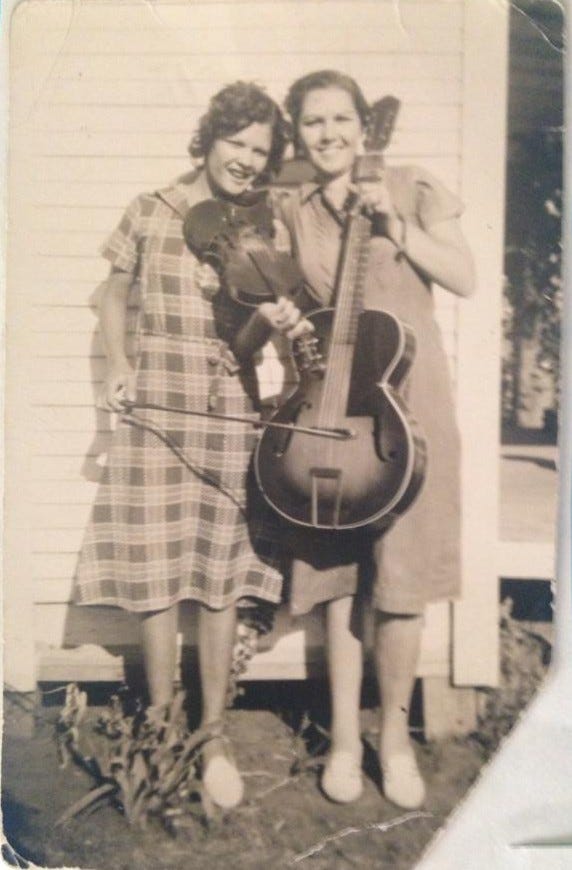
It’s fascinating to travel back in time and find out where you came from and how you got from there to here. At every turn, I found both good and bad. I was able to trace one branch of our family tree back to England and Wales, and another branch to a Cherokee woman named Red Bird (my 6X great grandmother), who died in 1775, the year before the Declaration of Independence was signed. Red Bird took on the Americanized name Nancy Elizabeth, married a white man, and moved from North Carolina to Arkansas. She died at the age of 30 when her only child was seven years old. Her father, Chief Willenawah “the Great Eagle” (my 7X great grandfather), outlived her, witnessed the American Revolution, and may have fought in it, alongside the Patriots or the Loyalists (I’m still researching that). He saw the United States become an independent nation. But knowing what I know about our country’s history, my joy in making these connections to my ancestors was tempered with wondering how Red Bird’s marriage came about, what her too-short life was like, how and why her father may have become involved in the American Revolution, and how they felt about what was happening to their nation.
I was able to trace my mother’s paternal line back to the American Revolution and was happy to find out Thomas Elias Butler of North Carolina fought on the side of the Patriots, but a deeper dive showed he was a slaveholder who likely wouldn’t have come down on the right side of history had he lived to see the Civil War.
My 3X great grandfather, John Quincy Adams Butler, likely participated in the Oklahoma Land Rush—he was born in Tennessee, and census records show that, before the 1889 Land Run, he was living in Texas and Arkansas, and after the Land Run, he was living in Pontotoc County, Oklahoma, so the timing is right. I have only ever known our family to come from Oklahoma, so it was cool to find out how we likely ended up there. I wondered whether he was a “Sooner,” one of the people who snuck into Oklahoma during the night before the race began, staked a claim to land, then lathered up their horses with soap to make it look like they’d run the horses hard and fast in the race. But the Oklahoma Land Rush took place only after the Choctaw, Creek, Cherokee, Chickasaw, Seminole, and other Native American tribes were removed to a designated “Indian Territory” in the 1830s. Unfortunately, I also learned that, before he migrated to Oklahoma, JQ fought in the Texas Calvary during the Civil War, on the side of the Confederates.
JQ’s sister, my 4X great aunt Melissa Butler, married George Washington Baines in 1840. Her husband was a slaveholder and a defender of the institution of slavery, so they likely would have been disappointed in their great grandson, former President Lyndon Baines Johnson—a liberal who fought hard for civil rights and who was my third cousin, twice removed.
Thanks to Finding Your Roots, I was prepared to find the problematic elements of my family’s history. That didn’t stop me from being disappointed—I guess some part of me wished I’d find more heroes who went against the grain. But there are still a lot of branches to explore. Just this morning, I found an ancestor who was an abolitionist. He left the slave state of Missouri during the Civil War and moved north, leaving his property behind, to join the Union. I was happy to end on that note, for now.
Last night, I started watching another Ken Burns documentary: Lewis and Clark. After that, I’m going to watch The Dust Bowl, which tells the story of how families like mine living in the Plains states lost everything and endured in the midst of drought and the Great Depression. Of course, poor farming practices greatly contributed to the Dust Bowl, so I expect to find some bad in that story, too.
Besides helping me to preserve my family’s history for my children and grandchildren, the research I’ve been doing has sparked my imagination. How, I wonder, did one sibling who lived five generations ago lay the foundation for the birth of a United States President who fought for civil rights in the 1960s, while her brother laid the foundation for the birth of … me? I haven’t found an introverted homebody writer in my family tree yet. How did LBJ and I turn out to be so different, but also, how did we turn out to be so similar? We both seem to have branched off from our family’s deeply conservative roots. Johnson seems to have been influenced by his grandfather and his religious beliefs. What influenced me? As far as I can tell, I’m one of only a couple of liberals in my generation and the generations before me. I’m not exactly sure how that happened, but it’s something I’m inspired to think about, and I’m pretty sure it’s something that will inspire my fiction in the future.
XOXO,
Leanne
P.S. If you have any interesting ancestry connections, I’d love to hear about them. I’m finding this project to be mostly thought-provoking but sometimes fun. On Finding Your Roots, for example, Kevin Bacon and Kyra Sedgwick found out they’re ninth counsins, once removed. :)
“When we illuminate the road back to our ancestors, they have a way of reaching out, of manifesting themselves … sometimes even physically.”
—Raquel Cepeda, Bird of Paradise: How I Became Latina
BOOK MAIL
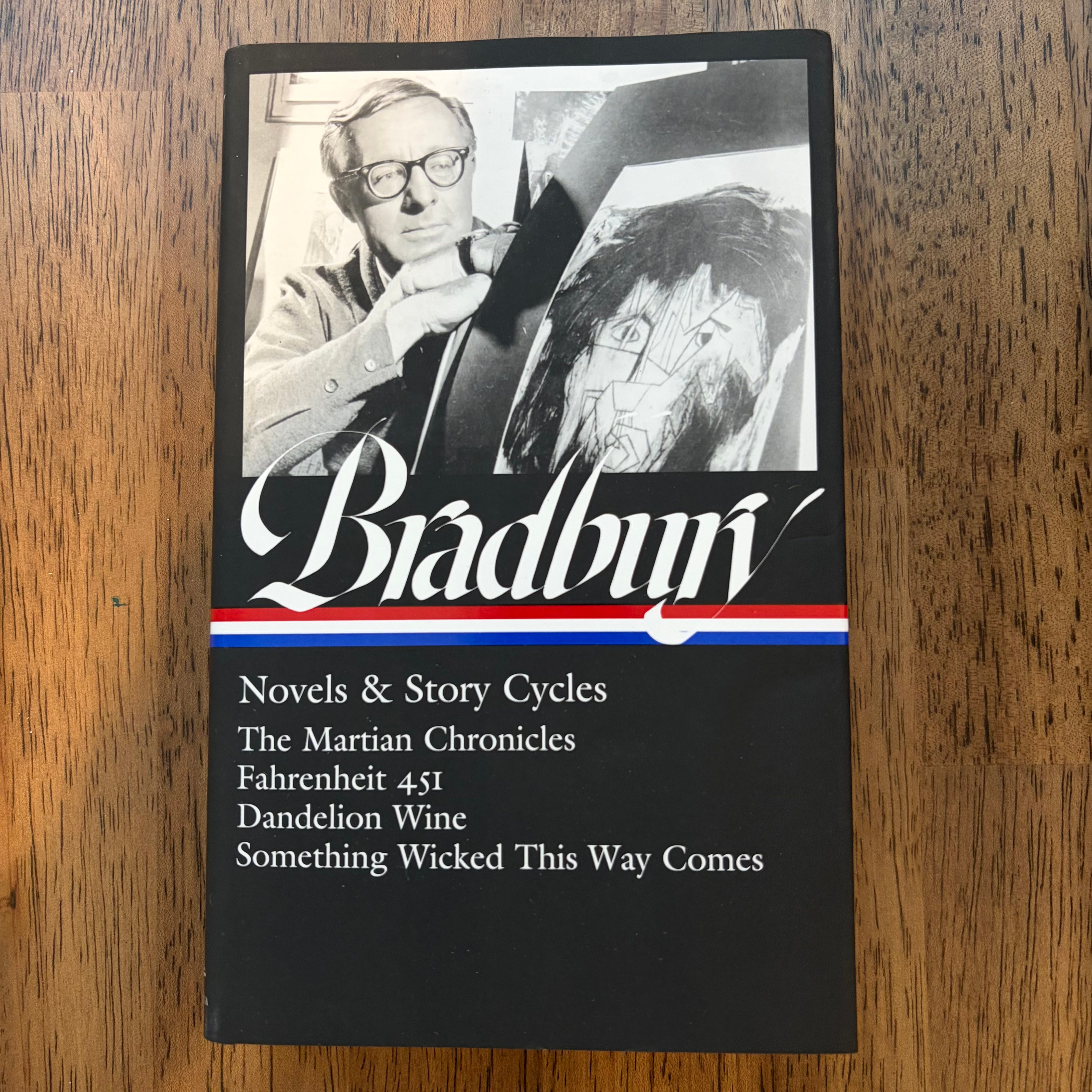
I’m rereading two books right now: Ray Bradbury’s The Martian Chronicles and Courtney Maum’s Before and After the Book Deal.
I was inspired to reread The Martian Chronicles while I was working on an upcoming post about AI and found myself referencing two stories from the collection: “The Veldt” (IYKYK) and “There Will Come Soft Rains,” which takes its title from Sara Teasdale’s 1918 poem “There Will Come Soft Rains”. Teasdale wrote the poem during World War I and the 1918 pandemic. Bradbury’s book was published in 1950, but is set starting in 1999 and ending in October 2026.
I was inspired to reread Before and After the Book Deal when I set one of my goals for 2026: start getting ready for my book launch next fall! I’m about halfway through and already have so many pages tabbed with Post-its.
“Books can be the people we never get to meet, ancestors or far neighbors.”
―Elizabeth Knox, The Vintner’s Luck
SOME THINGS FOR READERS
An Exodus and a Beginning: A Conversation with Joanna Choi Kalbus
(Elizabeth Zertuche for The Rumpus)
Walking with Lisa See: Retracing the footsteps of an autor’s ancestors in what was once Sacramento’s Chinatown, a critic reflects on how redevelopment buried essential stories of Chinese American History (Heather Scott Partington for Alta)
Regeneration: Two Flash Stories
(Fiction by Liz deBeer for Persimmon Tree)
“No one can be free who has a thousand ancestors.”
L.M. Montgomery, Emily Climbs
SOME THINGS FOR WRITERS
On Writing in Collaboration: The Art of the Duet
(Peta Murray for The Brevity Blog)
Commotion: The New Industry Standard—or Vice Versa: There Has Never Been a Golden Age for Artists (Sean Murphy for 1455: A Place for Storytellers)
Comps Can Clinch Your Query
(Lisa Levy for Jane Friedman)
“And when, at last, .... I stood in London with ten pounds in my hand—five of which I promptly lost—the ancestors dwelling in my blood who, all my life, had summoned me with insistent eldritch voices, murmured together, like contented cats.”
― P.L. Travers, What the Bee Knows: Reflections on Myth, Symbol and Story
SOMETHING TO MAKE YOU SMILE
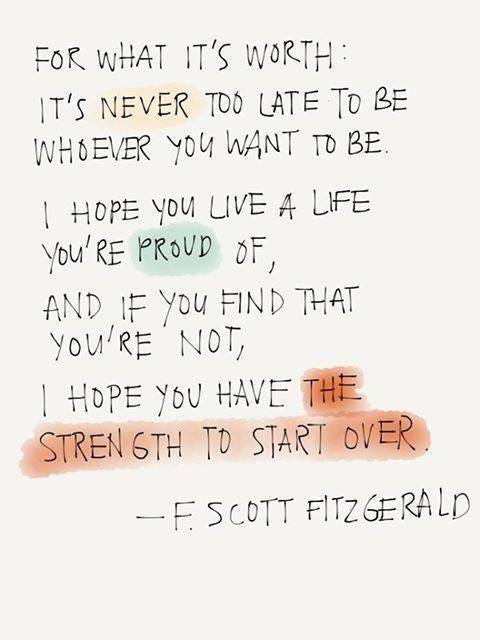
““When we connect with our ancestors and put their wisdom into action, we are evolving our collective consciousness. We are transporting the ancient truths of our collective past and birthing them into our future. What we create out of those truths extends the wisdom of all those who have gone before us, and it provides a guide for all those who will follow.”
― Sherri Mitchell Weh'na Ha'mu Kwasset
Leanne Phillips
Writer | Book Coach | Editor
leannephillips.com
Thanks for reading my newsletter! If you liked it, please share it with a friend who might enjoy it. If you didn’t enjoy the newsletter, you can unsubscribe below.
I have Oklahoma roots too, on my mother's side. She was born in OK. I have a short story called Dust Country published which is based on a family story. My grandmother is the main character. Another family member did a lot of research. On my dad's side, we have both witches (Rebecca Nurse) and witnesses in the Salem witch trials. Also, Mayflower descendants on his side. Lots more, let's compare notes someday!
That must be fascinating to trace your family back that far, Leanne. What interesting connections you’ve made.
Most of my knowledge comes only from records kept by my family. I haven’t tried using genealogy sites yet. I’m wary of the time commitment, but maybe one day!