
Lullaby
Short Fiction

I recently wrote about how difficult it was going to be to find a new home for my short story “Lullaby,” noir crime fiction inspired by “Your Song” (Elton John & Bernie Taupin, 1970). One of my friends, mentors, and favorite authors, Tod Goldberg, suggested I publish it myself. So that’s what I’ve done.
P.S. Happy birthday, Robert!
For Robert and Hunter and the memories I’ll always cherish of Anaheim, September 10, 2019.
Eve Sinclair accepted cigarettes when they were offered, but she preferred to light them herself. She carried a cheap, chrome-plated lighter in her pocketbook. It had belonged to an ex-lover at one time and still bore his engraved initials. T-R-M. Etched with precision into the lighter’s smooth surface. She’d tried to scratch the letters out with a file but had no luck. They were dug in deep, like she’d been eight years before.
“You from around here?” Walter asked. “I mean, I’ve lived here a long time. I think I’d remember a woman like you.” He held a cigarette case out to her, solid gold by the looks of it, with a platinum pusher, set with rose-cut diamonds. Cartier. Maybe Tiffany. This is a man who has much more than he deserves.
Eve took a cigarette from the case and placed it between her lips. Walter reached into his jacket pocket, but she waved him off. She retrieved Thomas’s lighter from her pocketbook and sparked it, turning her head away from Walter’s invading stare and a slight, salted wind coming in through the back door of the brothel-turned-speakeasy—for a small beach town, this place had more than its share of both. When she turned back, his eyes quickly reaffixed on the parted space between her lips, the sweet space where rum rocks flowed in and Marlboro smoke billowed out.
“No,” Eve said. She took a drag from her cigarette and held her breath until he looked up and into her eyes. Then she blew, softly, slowly, her mouth forming a perfect round O.
“No?” he asked. He seemed confused, like he’d already forgotten the question, which he probably had—it was rote, and Eve was certain he didn’t care much about the answer.
“No,” Eve said. “I’m not from around here.” She was, and they’d met, just the once. But she was counting on the fact she’d been too insignificant to remember. Everything depended on it.
“Oh,” Walter said. “Where are you from then? And what brings you to Pismo Beach?”
Eve ignored the first question. “The clams,” she said.
“Of course,” Walter said. “The clams. Had any luck? There are clams to be found year-round, certainly, but it’s February, and a storm is brewing. Not the best weather for clamming. Most people come in the summer.” He bent and contorted his speech as if reaching down to her, in the way that men did, explaining the wind and the weather and the seasons as if those were things a woman couldn’t understand.
“I’ve been lucky enough,” Eve said.
“How long will you be in town?”
Eve considered her response—some men might ask this question hoping she’d be sticking around. Not Walter. She’d made it her business to know a lot about this man. He had a wife and two children at home. A wife whose family money afforded him a lifestyle he hadn’t known as a child. But he traded in charm, and that charm had purchased him admission to an East Coast medical school, acceptance into a well-to-do family, and a mansion high on the hill when they’d relocated to California twenty years prior. Eve guessed the move was strategic on Walter’s part, probably to escape his wife’s family’s oversight of their new son-in-law. The wife, the mansion, the money—none of these were things he’d be willing to part with. He’d want to know Eve would be gone soon. The women he toyed with tended to be seasonal visitors.
“I was about to take a walk out on the pier,” Eve said.
“In this weather?” Walter laughed. “I told you. A storm is coming.”
Eve dropped her cigarette onto the dirt floor and snuffed it out with the toe of her shoe.
“How about we go for a ride instead?” Walter suggested. “I know somewhere quiet.” He looked around him, presumably checking to see whether any of the patrons were paying attention to Doc Belmont talking with the likes of Eve Sinclair, a housemaid at the Hotel Wave who, for some reason, was all dolled up like she belonged to Pismo Beach high society. But the other denizens were involved in their own capers, and Eve was glad of that—she didn’t want them to notice any more than Walter did.
Eve ignored the question and walked toward the back door. She paused and looked back over her shoulder. “I’m going for a walk on the pier,” she said again. “Would you like to join me?”
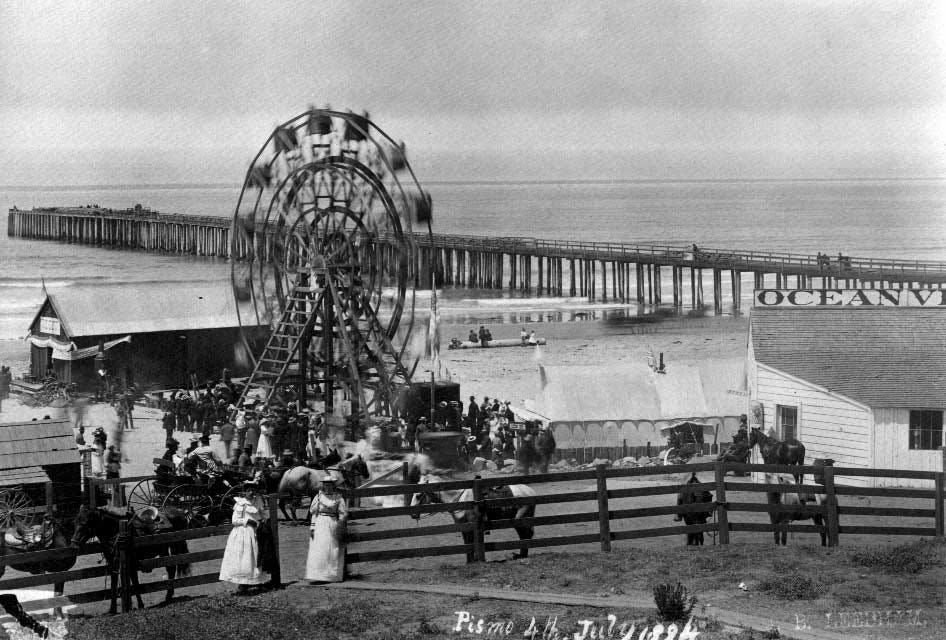
“I’m going to buy you a big house someday, Mama.” The earnest look on Jack’s six-year-old face had melted Eve’s heart. It was a Saturday morning, the summer before that cold February, when life was still warm and sunny.
“Is that so?” She’d smiled at the thought. At the way he’d tried to sound so grown up. She turned back to the mirror and continued to work her hair up, fastening it with hairpins, so it would fit under the cap she wore for work.
“Yes,” Jack said. “I promise. It’s going to be a big one with a garden and a big apple tree in the front yard. So we can have apple pie every night. And applesauce and apple cake and apple butter—I like apples.”
“I know you do.”
“And two bedrooms—you’ll have one of your very own. You won’t have to sleep out here anymore.”
“That sounds nice,” Eve said. “Where will you get the money to buy it?”
“From my farm,” Jack said. “I’m going to buy a farm with a barn for cows and horses, and we’ll have chickens too. I’m going to grow fruits and vegetables to sell. And apples. We’ll have a whole orchard of apples.”
He was still young enough to dream about big things for the future, Eve thought. She didn’t want to spoil that, so she didn’t ask him where he’d get the money for the farm. Dream big, Jack. Dream big for as long as you can. Dream until the day you realize a world like that wasn’t meant for me or for you. I hope that day is a long way off.
“Don’t you like the house we have?” she asked instead. They lived in a one-bedroom bungalow off Cypress Street, with no backyard and a small porch and no grass in the front. There was nothing but a dirt lot for Jack to play in, and the cold air came in through the cracks in the winter. But she kept it clean and grew gardenias and fragrant jasmine on the porch in pots, and it was walking distance to the beach and to work. Perhaps the best thing she could do for him was to teach him to be happy with the things he had instead of wanting the things he could never have.
“Yes, I like it. But I want to take care of you, Mama.”
“You don’t have to worry about that. I’m happy right where we’re at. And I can take care of us both. It’s my job to take care of you.”
“But I want our own house,” Jack said. “Someday. With a yard. Because I want a dog. When can we get a dog, Mama?”
Eve laughed. So that was where this conversation had been headed—she should have known. “Soon,” Eve said. He’d been asking for at least a year now, but she could barely feed the two of them, and besides, there wasn’t enough room. “Soon, Jack. I promise. We’ll get a dog someday soon.”
“For my birthday?” Jack asked. His birthday was only two months away, and Eve had no idea how she was going to afford to buy him any kind of present, let alone a dog.
“I don’t know about that,” she said. “But soon.” Her heart broke a little every time he asked. She wanted to give him the world. Damn Thomas for leaving them. She didn’t know what was harder—not being able to give Jack the things he wanted and deserved, or having to paste a smile on her face and act like it didn’t matter. Act like she was happy with the way things were.
“When is soon, Mama?”
“Go next door and fetch Hannah,” Eve said. “Ask her if she wants to come here today or if she’d rather have you stay at her house.”
“I don’t need Hannah,” Jack said. “I can take care of myself while you’re away.”
“Hurry now, Jack. I can’t be late for work again.”
“When I grow up, I’m going to take care of you, and you won’t have to go to work anymore. You can stay home with me. We’ll go to the beach every Saturday. We’ll take my dog. And you won’t need a husband.”
“Who said anything about a husband?” Eve asked. She had to admit that she sometimes thought about that herself. A husband would be nice, someone to share the load, someone to take care of her the way she took care of Jack. But she’d discovered long ago that love wasn’t enough and that a man couldn’t be counted on to stick it out through the difficult times. And besides, between working at the hotel, taking odd jobs cleaning at the homes up on the hill, and taking care of Jack, where would she find the time?
“Hannah said you’re going to get married someday. She said you’ll have a husband and he’ll be my dad. But I don’t need a dad. I don’t even want one.”
“Well, you don’t have to worry about that, Jack. I’m not getting married, and you’re not getting a new dad. Aren’t we just fine, the two of us? Things are perfect the way they are. Aren’t you happy?”
“Yes,” Jack said. “If only we had a dog.”
Eve had been walking on the pier every cold February night for the past two weeks. Alone. After sunset. After the beach had cleared. The first night, she’d wanted to avoid running into anyone she might know on Main Street, anyone she might know fishing off the end of the pier, anyone she might know at all. She stood staring out at the dark water and the gloomy winter sky until the tears came.
Walter followed Eve out the back door of the speakeasy, as she’d known he would. He had black eyes. Piercing, soulless. Nothing like Jack’s. At the speakeasy, it had scared Eve to look into Walter’s eyes. Walking side by side toward the pier, she didn’t have to look into them any longer, and she was grateful for that. She’d been afraid of everything for far too long, but she couldn’t afford to be afraid anymore.
The gentle winds were gusting now, moderate at first, punctuated by periods of calm, but they soon met up in one strong and steady breeze. As they approached the water, the white foam of the waves’ high crests was visible, reflected in the moonlight. When they reached the pier’s edge, Eve could feel a slight cold spray on her face.
“Let’s go down to the beach,” Walter said. “Under the pier. We’ll have more shelter from the wind. And it will be more private.”
“No,” Eve said. “I want to walk on the pier.” She was shivering now, but she forced a steady assertiveness into her voice she in no way felt. It seemed to work. Walter continued walking by her side toward the pier. He didn’t offer Eve his jacket. She made note of the fact—it was a small thing, trivial under the circumstances, but it helped her resolve. Besides, she wouldn’t have taken his jacket even if he had offered it. He wasn’t a gentleman, and she wasn’t in the mood for false chivalry.
No, Walter’s eyes were nothing like Jack’s. Jack had the sweetest eyes—sometimes green, sometimes blue. This kept her moving forward, toward the pier. She stepped out onto it, the toe of her right pump first, followed by the left.
On Mother’s Day the year before, a five-year-old Jack had attempted breakfast—sticky oatmeal that hadn’t been cooked long enough, cold coffee, and toast so burned it was black. He’d picked a few oranges off Mrs. Nelson’s tree and squeezed them into juice that was full of pulp and seeds. He’d cut flowers from the pots on the porch and used a jelly jar for a makeshift vase—a few ants skittered about on their leaves. Eve ate and drank every bit of the precious breakfast and flicked the ants away when Jack wasn’t looking.
“I made you a present too, Mama,” Jack said. “Well, two presents.” He’d wrapped the first gift in brown parcel paper, a brownish clay sculpture he’d made with Hannah’s help.
“It’s lovely, Jack,” Eve said. She couldn’t tell what it was supposed to be, but she didn’t want to say that, so she asked, “Will you tell me about it?”
“It’s Lucky,” he said. “It’s our dog. He’s a collie.”
“He’s beautiful,” Eve said. “I’m going to put him right here on the mantel, where he can watch over us until the real Lucky arrives.” Jack beamed.
“I made you a potion too,” Jack continued. “A magic potion. Like the ones that man was selling at the traveling tent show last summer.”
“A magic potion?” Eve asked.
“Yes, I’ll go get it.” He ran into his bedroom and came back with a small bottle filled with a greenish liquid. “I didn’t wrap it,” he said. He tucked his upper lip in disappointment.
“That’s okay,” Eve said. “This is better. I can see the colors. It’s a splendid potion. Do I rub the bottle? What does the potion do?”
“No, you drink it,” Jack said.
“Oh, I drink it. Hmm, what’s in it?” Eve steeled herself to drink it no matter what was in it. She would never disappoint Jack by not doing so. But she wanted to prepare herself.
“Hannah helped me make it,” Jack said. “It’s got smashed apple in it.”
Of course it does.
“And it’s got a little molasses. The apple and the molasses make it sweet. And a little salt and pepper and some red chili to make it spicy.”
“That sounds delicious. And what gives it its lovely green color?”
“Pickle juice!” Jack said. He sounded so proud.
“What a splendid idea,” Eve said. “What does it do?” She was stalling for time now and working up her nerve. “What’s the magic?”
“It’s an energy potion,” Jack said. “So you won’t be so tired all the time.”
“Oh,” Eve said. “But I’m not tired all the time. Just sometimes, after work.”
“I know,” Jack said. “But like when I want to go to the beach when you get home from work. Sometimes you’re too tired and want to stay home. And you sleep a lot. The magic potion will fix things right up!”
“I see,” Eve said. “Well, let’s try it out.” She tipped the bottle up and drank it down in one gulp. She tried not to let on how unpleasant the smell was, let alone the taste. Closing her eyes, she sat still for a moment. Then she opened her eyes suddenly. “It worked!” she cried. She played it up as if she were astonished. “I feel fantastic. I have so much energy. Hey, let’s go to the beach!”
Jack couldn’t have looked happier. “I knew it would work,” he said. “Let’s go to the beach! I’ll go get my pail.”
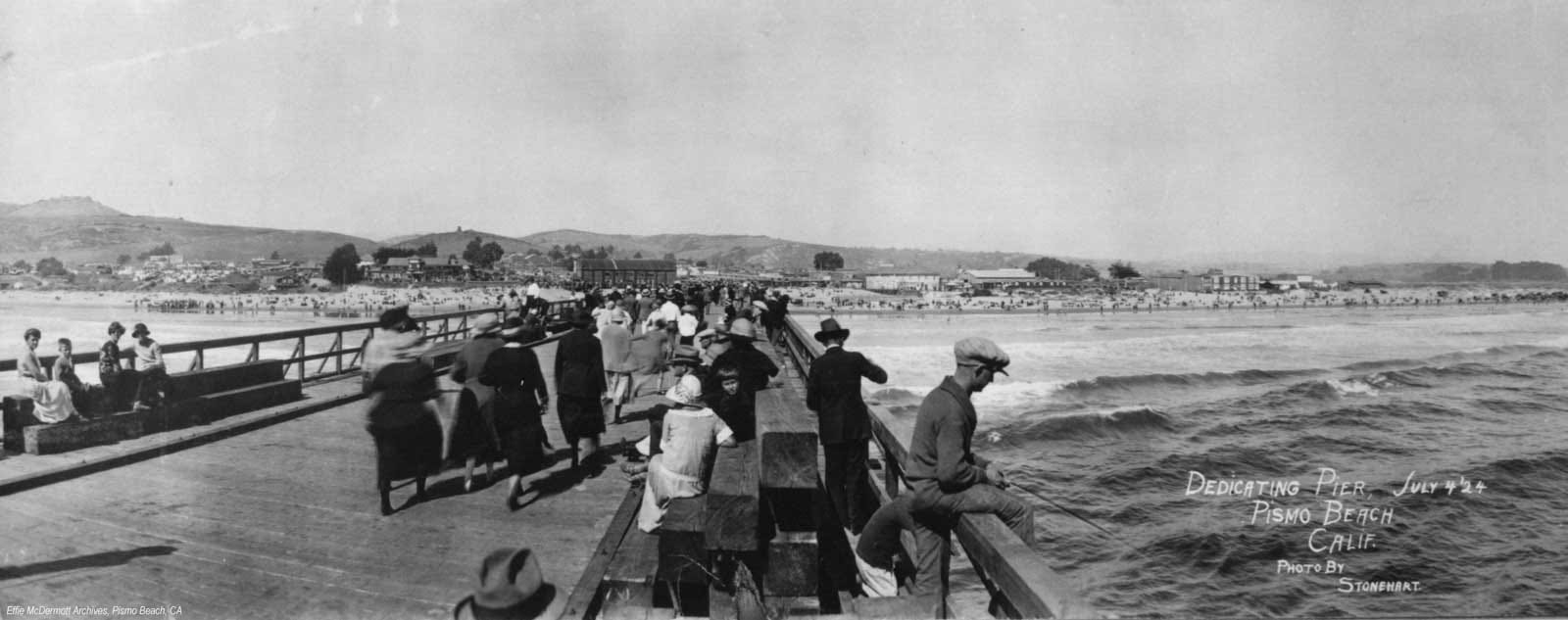
Eve had been walking the pier every night for the past two weeks—every night since Jack died. At first, she’d waited until after sunset so she could be alone. She waited until the beach cleared because she couldn’t stand the sounds of the families on the beach, of little boys and little girls laughing and shrieking, of mothers calling to their children who were playing at the edge of the surf, “Don’t go into the water!”
The first night, she’d stood at the end of the pier and howled at the black sea and the purple sky until the fog rolled in and covered the stars.
The second night, she’d had the painful feeling in her throat that accompanied a need to cry, but she couldn’t summon tears. She’d thought about the unfairness of the world. The way her pleas had been dismissed. The way her child had been dismissed.
The third night, she’d come up with the idea.
The winds were reaching gale force now, pushing against Eve’s body as they made their way onto the dock. Out on the pier, the spindrift from the waves cresting on either side of them blew hard into Eve’s face. Walter took her arm now that they were out of view of the hotels and storefronts.
The wooden planks swayed underneath them, and Eve felt she might be sick. But she was surprised to realize she was no longer afraid. She was here, where she’d wanted to be, and now, anything could happen, and it would be as it was meant to be. She didn’t care if the pier collapsed and took both her and Walter with it.
“What are we doing out here?” Walter called, raising his voice to compete with the wind.
That was getting more difficult to explain under the circumstances. Her teeth were chattering, and she wanted nothing more than for Walter to be quiet and walk. She gathered her arms into her chest. “I love the fresh sea air,” Eve said. “We don’t get this back home.”
“Where is back home?” Walter asked.
This small talk isn’t necessary. It’s not what we’re here for.
“Kansas,” she lied. It was the first landlocked state that came to mind, but the truth was, she’d lived near the ocean her entire life. When this was all over, she’d be heading back home, to Coronado. Coming here with Thomas had been a mistake. Except for Jack. Jack was the only thing in the entirety of her life that she did not regret.
“What are you doing up there?” Eve had cupped her hands around her mouth and shouted up through them, as if they were a megaphone. It was a warm October evening not so long ago, but it felt so far away now.
“Just thinking,” Jack said. He sat on the edge of their bungalow’s roof, his legs dangling over the side. He looked so peaceful, so content.
“Come down,” Eve said. “Let’s go for a walk.” But Jack had no fear of anything.
“Come up here, Mom,” Jack said. “You can see the town for miles. You can see the beach. The sun is setting—it looks so pretty, all orange and purple.”
Eve looked over at the rickety ladder leaned up against the bungalow. She was afraid of heights, but she’d never told Jack that. She preferred her little boy to believe she wasn’t afraid of anything. Kicking off her shoes, she began her ascent, mindful not to look down. When she reached the top of the ladder, Jack reached his hand out to help her up—wouldn’t that cause them both to topple? She waved off his assistance and clambered the rest of the way up onto the roof on her own. Gingerly, she turned around and sat next to Jack, letting her legs fall over the side and holding onto the smokestack from their pot belly stove with one hand—it was old and looked like it might come loose from the roof with one good gust of wind, let alone her weight if she were to slip, but it gave her a small sense of security.
“What are you thinking about?” she asked. She was careful to take slow, even breaths and to modulate her voice so he wouldn’t know she was afraid.
“Nothing,” Jack said. “Sometimes it’s nice to think about nothing.”
“Yes,” Eve agreed. “It is nice to think about nothing sometimes.”
“Will you sing me that song, Mama? The one I like from the radio?”
“Sure, baby,” Eve said. She started with the chorus and changed the words a little because he always liked it when she did that:
Yes, sir, Jack’s my baby
No, sir, don’t mean maybe
Yes, sir, Jack’s my baby now.
Jack sat listening, the corners of his lips slightly upturned. He looked out at the ocean, presumably thinking about nothing. Eve felt her fear ebbing away. She’d never felt such peace.
When they reached the end of the pier, Eve leaned up against the far railing and pointed out at the sea. “Have you ever seen anything more beautiful, Walter?” she asked. The wind was so strong now that it whipped her hair around her face and threatened to knock her off balance. She gripped the rail more tightly.
“Yeah,” Walter said. “Swell.” He pulled a hip flask from his jacket and took a swig. “Want a belt?” he asked.
“No,” Eve said. “Thanks. I’ve had enough.”
Walter tucked the flask back into his jacket. He moved behind Eve and put his arms around her waist. “How about a kiss, doll?”
Eve felt sick to her stomach, not from the sway of the pier or the hooch, but from the feel of this monster touching her. “Won’t your wife mind?” she asked.
“What do you know about my wife?” Walter asked. “I’m not married.”
“Is that so, Dr. Belmont? That’s not what I hear.”
“What kind of game are you playing?” He didn’t release his grip on her waist—in fact, she could feel it tighten. “I’m not somebody you want to mess with, doll.” He turned her around roughly, to face him, and pressed his hands against her shoulders. “I didn’t come out here for nothing,” he said. “Come on. I’ve had enough of this nonsense.” He grabbed her arm and started pulling her back in the direction of the shore. “Enough of this weather. We’re going to get in my car, where it’s nice and warm.”
“All right, mister,” Eve said. “Just one more minute. Please. I saw a whale breaching over there.”
“Give me a break,” Walter said. “I can barely see my hand in front of my face right now. There’s no way you can see anything out on the water.” He sounded annoyed, but a little less so, like he realized if he’d just give in to this one little thing, he was about to have his way without too much more struggle.
“Just there.” Eve pointed toward Port San Luis. Walter obliged her and moved to the railing on the north side of the pier.
“I don’t see anything,” he said.
“There,” Eve said. She moved up against his back and pointed again. “Look out there,” she said. “Out toward the lighthouse.” Then, with one solid push, he went through the railing and tumbled into the water. She leaned back as she pushed, so she wouldn’t follow behind him. She stood staring at the space where the wooden railing had once been, reveling in the satisfying sound of wood cracking along the deep seams she’d cut.
“It’s a common cold,” Dr. Walter Belmont had told her. “Take him home and give him some chicken soup.” He was disinterested and dismissive.
“It’s not a cold,” Eve had said. Jack sat wheezing on the examination table, struggling for air, his skin a pale blue. She lowered her voice so Jack wouldn’t hear the fear in it. “Doctor, please. I know my son. He’s had colds before. This is not a cold. This is something much worse.”
The doctor smiled a condescending smile and patted Eve on the shoulder. “He’ll be fine. All he needs is a rest and his mother’s love.” He turned on his heel and walked away.
Eve ran after him. “Please,” Eve begged. “Please help him.” She glanced back at Jack. “Doctor, he can’t breathe.” But Dr. Belmont had kept walking. Within minutes he was flirting with his young nurse—he whispered to her, and she glanced Eve’s way and giggled. Eve was nothing, nobody. Jack was nothing to anyone but her.
That last night, Eve hadn’t left Jack’s side. She’d tried everything—cold compresses, warm compresses, cool baths to ease his fever, steam to open his lungs, soup to soothe his throat. She rubbed mentholated ointment on his chest and baked him an apple cake, but he wouldn’t eat anything. Couldn’t eat anything. Nothing eased the wheezing or the crackling in his lungs, and he just lay there. He barely moved at all.
Desperate, Eve sent Hannah to fetch the doctor.
Jack’s breaths became shallower and sharper until they turned into gasps. She pulled him onto her lap and spoke softly to him. He didn’t respond. He just lay limp in her arms, his eyes closed, and she was glad of that because she couldn’t have stood to see fear in them, in the blue/green eyes of her little boy who was never afraid of anything. All she could do was hold him and rock him and sing to him until the doctor came.
Yes, sir, Jack’s my baby
No, sir, don’t mean maybe
Yes, sir, Jack’s my baby now.
Hannah stood at the open door then, so out of breath she must have run the entire way there and back. The doctor was at home, Hannah had told Eve. But he was having dinner with his family. He refused to come.
Back on shore, she watched the waves, driven by heavy wind and rain, beating without mercy up against the pier’s wooden pilings. The pier was only two years old. She and Jack had celebrated its inauguration with the rest of the town. She could still feel his four-year-old hand in hers as they’d made their way to the boardwalk. Now, everything was gone. She imagined she could hear the sounds of the pier splintering, but maybe it was her heart.
Jack had been the best little boy. He’d wanted to give Eve the world. He’d talked about the house he was going to buy for them to live in someday, with a white picket fence and a sweet little garden. Somewhere in the back of her mind, Eve had always known it wouldn’t happen. Jack had talked about a lot of things that would never happen, like how he was going to have his very own apple orchard and grow all the apples he could eat. Like how he was going to have a dog someday and name it Lucky. Like how he was going to grow up to be a farmer. Like how he was going to grow up at all.
On night four, she’d begun carrying a panel saw, concealed in the folds of her skirt. Last night, she’d tossed it into the sea. When things were ready, she’d sold off everything she owned except for a few items of clothing and a dress she’d once bought to wear for Thomas, back when she thought he would stay. It was a sky-blue evening gown with a drop waist and a lace hem. She didn’t know why she’d kept it—there was a time she thought she might wear it out dancing on their wedding day. But now, she knew she’d been saving it for this.
When she’d done all she had to do, she’d returned the keys to the bungalow to her landlord, bought a cheap car and parked it on Cypress Street, and gone to the speakeasy to find Dr. Belmont.
It wasn’t much, this thing she’d done. No, it’s not much. In the big scheme of things, her grief and her rage were such small things they may as well have been nothing. They wouldn’t bring Jack back. Nothing ever would. They wouldn’t make up for the times she’d said she was too tired to go to the beach or the times she’d said no to getting a dog. But it’s the best I can do, Jack. Rage is all I’ve got left. A mother’s rage is all I have to offer to you. To anyone. It will have to suffice.
Sixty-mile-an-hour winds continued to pound the California coastline throughout the night. Whole gale winds, a full-blown storm, uprooting trees and damaging the town’s structures. This was something Eve hadn’t planned on, but it was welcome. It was as if nature itself was her co-conspirator. By morning, the railroad tracks between Avila Beach and Port San Luis had been washed out. It didn’t matter—in the storm’s aftermath, Eve was traveling by car. By morning, acres of green vegetables lining the highway from Pismo Beach in the south to San Luis Obispo in the north had been destroyed. But Eve was headed south. By morning, the sunporch and dining room of the Hotel Wave had been ripped loose from the hotel and carried out to sea, and so had Walter. The beach was covered with wood and pilings, and the sun was shining, so warm and so kind. By morning, the end of the pier was gone, and so was Eve.
“Lullaby” first appeared in the anthology Better off Dead Vol. 1: Crime Fiction Inspired by the Music of Elton John and Bernie Taupin (Down & Out Books, 8/25/2025).
So cool you did an audio! Thanks for sharing!
Thank you, Michelle! I kind of enjoy recording, but I need to find a better way. As far as I can figure out, on Substack, there's no option to pause, so I have to read straight through without stopping! And try not to make too many mistakes. LOL