
Writing Multiple Points of View
Can you do it? Yes. Should you do it? Maybe. Maybe not.

Harper Lee once wrote, “You never really understand a person until you consider things from his point of view.”
I generally advise writers to stick to a single point of view (“POV”) for their first book. Often, when a new writer wants to write multiple points of view, it’s because they think it will be easier. If you’re stuck in a single person’s point of view, it’s a challenge to get things in that the POV character couldn’t know.
But what they don’t realize is that it’s actually much harder to write multiple points of view and to write them well.
Things writers get wrong when writing multiple points of view:
They don’t give each character their own unique voice and personality. In other words, all the characters’ dialogue sounds the same.
They hop into another character’s head for a chapter or a scene or even a single paragraph just to get certain information in, but don’t flesh the character out.
They allow multiple points of view to mess up the story’s narrative drive.
Think they’re writing from an omniscient POV when they’re really head-hopping.
Most importantly, they don’t have a good reason for adding another POV, and it doesn’t serve the story.
Things to consider:
Why do you want to write multiple points of view? If it’s because it’s easier to get information in through a different POV, my suggestion is it will be far easier to do the work to get the information in some other way than it will be to write multiple POVs well. I’ll discuss some ways of getting information in without going into another POV in a future post, but this is where a writer’s creativity comes in.
If you’re going to write multiple points of view, each point of view must have a reason for being present—not a reason that serves you as the author by making your job easier, but a reason that serves the story.
If you’re going to write multiple points of view, each POV character must have their own unique personality, voice, way of speaking, quirks, physical way of being in the world, hopes, dreams, desires, wants, needs, etc. They must be fully fleshed out, which is a lot of work. They can’t just be dropped in for a scene or two to get information in—keep in mind that each of these characters is the hero of their own story, and you must do the work to make them a fully fleshed out character.
If you decide to write multiple points of view, you must still maintain the narrative drive or cause-and-effect trajectory throughout the story. This means each scene or chapter must drive into the next to keep the story moving forward, i.e., the action of one scene or chapter causes the action of the next scene or chapter, and so on, and so on, and so on. And you have a decision to make ….
If you’re alternating points of view, will the cause-and-effect trajectory track from chapter to chapter, no matter whose POV the chapter is in? Or will it track chapter to chapter by POV?
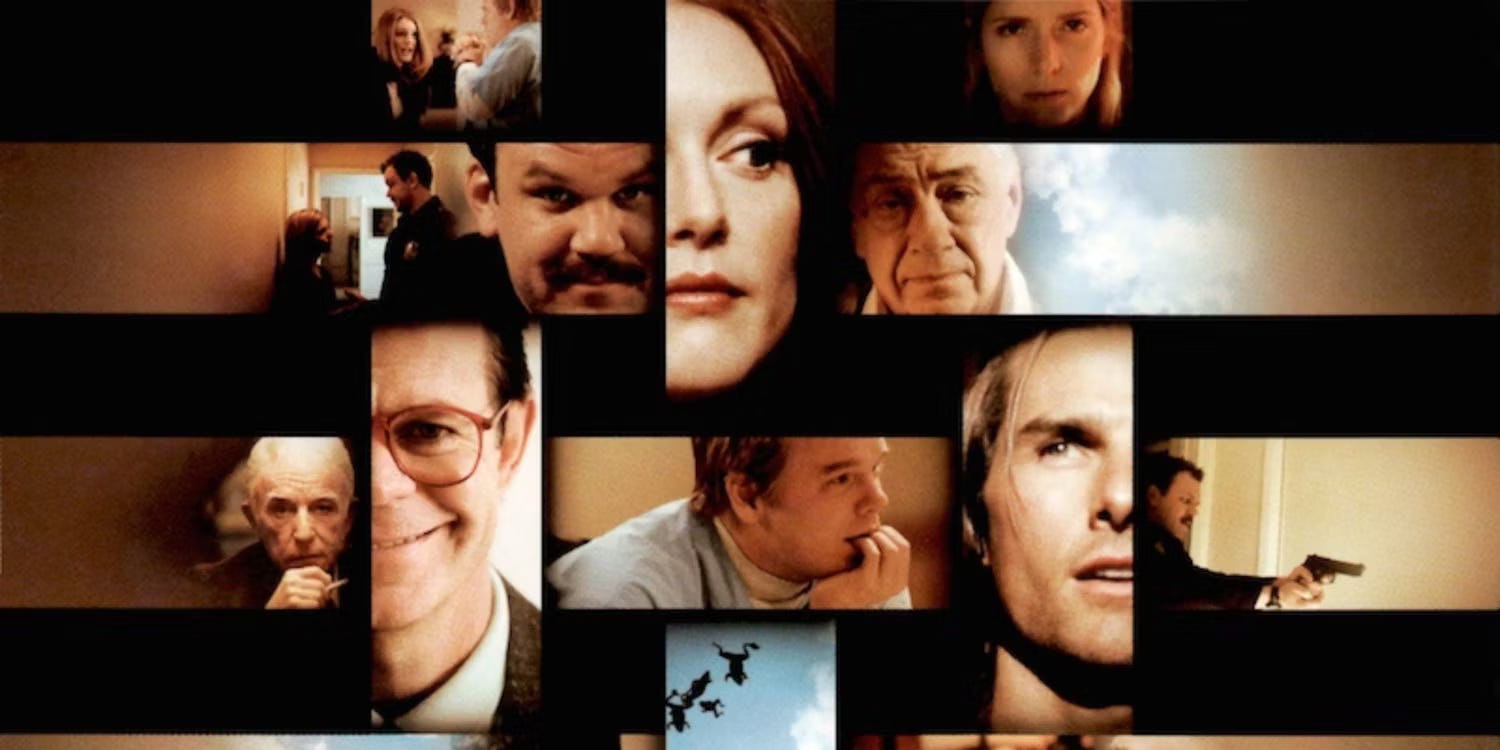
If you want to write multiple points of view, take a look at how the pros do it. Read well-written novels in multiple POV. Watching movies where a story is told in multiple POVs is instructive, too—it’s easy to see how different each character is when you’re watching different actors play them in films like Magnolia, Pulp Fiction, Gone Girl, Bad Times at the El Royale, and Knives Out. In these films, each character has their own little story within a story, their own character arc, and their own problems, pasts, memories, pain, wants, and needs.
These are a few of the books I recommend to clients who want to study the craft of writing multiple points of view:
Everything I Never Told You by Celeste Ng
With or Without You by Caroline Leavitt
Station Eleven by Emily St. John Mandel
Atonement by Ian McEwan
P.S. Reminder: Early bird pricing is available for my 12-week Fall Into Your First Draft program through September 15th!