
My Morning Scribbles
They're good for my writing, but are they good for my mental health?

I’ve kept journals and diaries on and off throughout my life, but some years ago, I worked my way through Julia Cameron’s The Artist’s Way and started writing “morning pages.” The idea is to write three pages every morning, in longhand. The writing is to be stream-of-consciousness and is intended to clear one’s mind of all the bullshit and open up the space for creativity. The pages are to be tossed, not kept.
“All that angry, whiny, petty stuff that you write down in the morning stands between you and your creativity,” Cameron writes about morning pages. “Worrying about the job, the laundry, the funny knock in the car, the weird look in your lover’s eye—this stuff eddies through our subconscious and muddies our day. Get it on the page.”
I’ve been writing morning pages in softbound journals since October 6, 2018. I know this because I can’t bring myself to toss my pages. I finished the 12th volume of my journals this morning and stacked it atop the other 11 volumes. I’ll start a fresh journal tomorrow morning, and I’ll keep that one, too. I like the idea that I’m documenting a life.
My writing is stream-of-consciousness—I don’t give it a lot of thought. I write whatever comes to mind, like how much I enjoyed my granddaughter Louise’s first ballet recital on Saturday, how much I enjoyed having lunch with my granddaughter Abigail on Sunday, how much I was looking forward to things: lunch with my sons on Tuesday, dinner with all of my family on Wednesday, visiting Monterey in May and Santa Cruz this summer. There are a lot of things to celebrate in those pages.
But it struck me a few days ago that my morning scribbles are often a litany of the things I’m worried about or anxious about or stressed about. How much work I accomplished the day before (or didn’t accomplish) and how much I have left to do. What’s going wrong in my life. The brain dump. I’m writing about the kinds of things Julia Cameron recommends, so I’m doing it right. The writing is meant to clear my head of those things, but does it?
I’ve written before about the questions I ask myself every morning—questions that are intended to set the tone for my day. I ask myself what I’m proud of in the moment, what I’m grateful for, what I’m happy about, what I’m looking forward to—things like that.
But then I sit down to write my pages each morning, and I do the exact opposite. I write about things I’m ashamed of, things I’m unhappy about, things I’m worried about, things I regret, things I dread. I can’t believe it took me so many years to ask myself this question: When I dump all my woes into my morning pages, am I counteracting my morning questions? Am I setting a tone of failure and worry and frustration for the day?
I did an internet search for whether morning pages are good for one’s mental health, and I found a mix of views on the subject.
Entrepreneur Chris Winfield says that morning pages are a brain dump that clear his mind so he can focus on other things. In addition to unleashing ideas and creativity, Winfield finds that morning pages improve his mental health: “Writing helps sweep away anxiety. Envy, anger, fear, vulnerability, procrastination … all those emotions can be put on paper and seen for what they are. By getting this stuff out and looking at it, you realize it’s not so bad and it helps to ground you.”1
A lot of people agree with Winfield.
Writer and graphic designer Joe Sereni says, “Morning pages are the best thing I’ve done for my creativity and mental health.”2
Author Carol Milter writes: “On a mental health level, it is extremely valuable to be able to acknowledge our fears, frustrations, and anxiety, and to observe our sources of trauma and joy.” She finds that “[t]he feeling of letting all out through the writing, in a way that is entirely private to you and free from judgment, is amazing.”3
Writer Caroline Butterwick interviewed therapist Jenny Warwick about how morning pages can support mental health and well-being. Warwick explained that clearing thoughts from one’s mind and putting them down on paper can help a person “start the day fresh” and get “some insight into what’s actually going on in your head, which is surely worth doing for your mental health and wellbeing.”4
Yes, yes, yes. These are exactly the kinds of things morning pages are intended to do, but I’m not sure that’s what they’ve been doing for me, so I kept searching for other viewpoints.
Almost everything I read touted the mental health benefits of writing morning pages. Almost everything, but not everyone agreed.
Author Jennifer Tatroe found that, for her, “morning pages led me into a spiral of depression and self-loathing. Instead of purging my negative thoughts, writing them down gave them purchase.”5 “[Especially for those of us prone to depression,” Tatroe says, “writing those thoughts down gives them power.” Tatroe didn’t stop journaling, but she began doing so differently, using things like listmaking and guided journaling.6
“[I]f a practice regularly leaves you feeling worse than before you began, it’s not a productive practice. Morning pages work well for a lot of people. They don’t work for me. They may or may not work for you.”
—Jennifer Tatroe
Author and publisher Maria McCarty writes about a journaling session she attended that changed her mind about writing morning pages, pages that can easily become “pages of negativity, covering the same ground over and over again. … I can do nothing with this material. It does not bring me on creatively.”7 McCarthy didn’t stop journaling, but she changed the way she journaled, which, she says, led to an improvement in her mental health.
I related to what McCarty said about covering the same negative ground over and over again. I related to what she said about it not fueling her creativity. I wondered whether Tatroe’s experience—whether writing down negative thoughts gives those thoughts more power—more closely mirrored my own.
Here’s the thing: I love writing morning pages. I love journaling. I love the ritual of it. I love how tactile it is. I love holding my softbound journal in my hands and my pen between my fingers. I love scratching ink across thick, creamy pages and making words and sentences. Most of the time, my handwriting is awful, but there are days when I think it is lovely.
I sometimes take breaks from journaling, maybe days or weeks. But for the most part, I stick to this routine of writing over coffee first thing each morning. I come away from it feeling energized and ready for the day, but I’m wondering about the subconscious effect (for me). What thoughts am I carrying with me into the day? Perhaps all the way through the day and into my sleep? Author Deanne Stillman recommends thinking about your book when you’re stuck, as you’re drifting off to sleep, to put your subconscious mind to work coming up with ideas. What am I putting into motion when I think about negative things as I start my day?
It’s not the ritual of writing three pages every morning that isn’t good for my well-being. It’s the idea of dumping all my negative stuff out into the world and giving those thoughts substance and life, each and every day. If asking myself morning questions to remind me of all the good things in my life puts me into a positive frame of mind for the day, then it makes sense that writing down the bad stuff each morning might put me into a negative frame of mind.
We are all different. There is no one-size-fits-all way to do things. Morning pages that are a stream-of-consciousness brain dump seem to work for a lot of people. Most people. I’m considering now whether they work for me. I don’t think they do.
Let’s be honest—I’m a worrier by nature. My daughter Melissa once gave me a copy of The Worst-Case Scenario Survival Handbook because that’s where my mind always goes—to the worst-case scenario. No amount of brain dumping is going to make me stop thinking about all the things I’m worried about. But I’m beginning to think it can give them purchase, as Tatroe says. I’m wondering now whether the daily practice of brain dumping the negative actually makes me ruminate on the negative more than I already do.
I don’t know the answer. It’s a theory at the moment, nothing more. But when I start a fresh volume of my journal tomorrow morning, I’m going to try journaling in a different way. I’ll report back.
In the meantime, I’d love to hear about your journaling practice, how it works for you, and what you get from it.
“[Journaling] is like whispering to one’s self and listening at the same time.”
—Bram Stoker, Dracula (one of Mina Murray Harker’s journal entries)
NEWS & ANNOUNCEMENTS
Please join me at the Central Coast Writers’ Conference, September 26th & 27th, in sunny San Luis Obispo, California!
“The best time to begin keeping a journal is whenever you decide to.”
—Hannah Hinchman
SOME THINGS FOR READERS
“Time and Place Have Had Their Say” on Visiting Zora Neale Hurston’s Grave
(Iris Jamahl Dunkle for Finding Lost Voices)
For Tina Louise, Escape, Finally, From Gilligan’s Island
(Abby Ellin for The New York Times)
How I Stood Up for Myself Despite My People-Pleasing Ways
(Karen DeBonis for Next Avenue)
“Write what disturbs you, what you fear, what you have not
been willing to speak about. Be willing to be split open.”
—Natalie Goldberg
SOME THINGS FOR WRITERS
My top tips for AWP Los Angeles 2025
(Courtney Maum for Before and After the Book Deal)
Smarter, Better, Faster: On all the hard work you’ve done, and driving from the back seat (Danielle Lazarin for Talk Soon)
Oh God People Are Going To Read My Book
(Kate McKean for Agents and Books)
What 15 Literary Agents Are Seeking in RomCom Submissions Right Now
(Heather Garbo for Write Your Next Chapter)
What Are Women’s Fiction Literary Agents Looking for Right Now?
(Heather Garbo for Write Your Next Chapter)
“Documenting little details of your everyday life becomes a celebration of who you are.”
—Carolyn V. Hamilton
SOME THINGS TO MAKE YOU SMILE
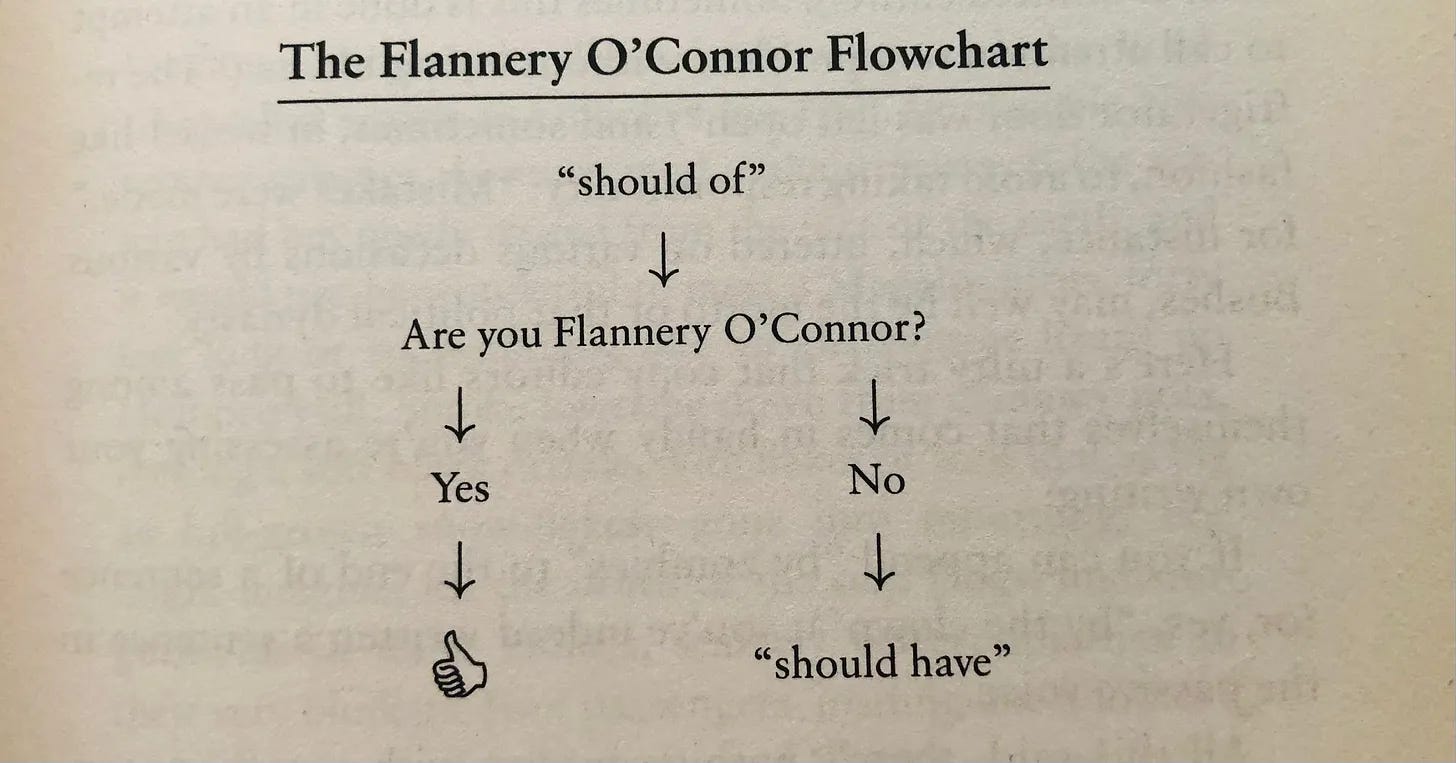
Are you Flannery O’Connor?
(Benjamin Dreyer for A Word About… on the occasion of what would have been Flannery O’Connor’s 100th birthday)
44 keys to writing a life story: Lessons from a quest for speed and perfection.
(Catherine Palmer for Amid Life with Catherine Palmer)
Give Your Worries to the Forest
(Paul Crenshaw for Melt With Me)
“I write entirely to find out what I am thinking, what I am looking at,
what I see and what it means. What I want and what I fear.”
—Joan Didion
Leanne Phillips
Writer | Book Coach | Editor
leannephillips.com
Thanks for reading my post! If you liked it, please share it with a friend who might enjoy it. If you didn’t enjoy the post, you can unsubscribe below.
“These 3 Pages Might Be Your Key to a Clearer Mind, Better Ideas and Less Anxiety,” Chris Winfield, https://www.chriswinfield.com/morning-pages/.
“Why morning pages are the best thing I’ve done for my mental health,” Joe Sereni, https://medium.com/@joseph.sereni/why-morning-pages-are-the-best-thing-ive-done-for-my-creativity-and-mental-health-04dfea4d142f, 10/21/2024.
“Morning Pages: The Joy of Writing Upon Awakening,” Carol Milters, https://carolmilters.com/morning-pages-the-joy-of-writing-upon-awakening/, 6/04/2019.
“Why you should try writing morning pages to boost your wellbeing,” Caroline Butterwick, happiful, https://happiful.com/why-you-should-try-writing-morning-pages-to-boost-your-wellbeing, 9/13/2022.
“When Morning Pages Are Bad for You,” Jennifer Tatroe, https://www.fromjenn.com/blog/when-morning-pages-are-bad-for-you.
“Why I Don’t Write Morning Pages (and What I Do Instead),” Jennifer Tatroe, https://www.fromjenn.com/blog/why-i-dont-write-morning-pages-and-what-i-do-instead.
“Morning pages may not be the artist’s way,” Maria McCarthy, https://www.medwaymaria.co.uk/morning-pages-may-not-be-the-artists-way/, 1/25/2014.
Thanks so much for this post! It really hit home for me. (Editing here after writing my turns-out-VERY-long response, it seems it even struck me more than I realized…)
I agree with you about morning pages, though I have to confess that I don’t have a ton of experience. I’ve started a dozen or more journals over my adult life, but usually only put entries into them when I was in crisis (usually trying to process a big fight or conflict). Within the past month, though, I’ve been writing almost every morning. It started with trying to process a big conflict (election related), but writing felt good, and I kept at it.
It’s possible that this time has been more successful because I literally started writing in a leftover composition notebook that I’d found in my basement while I was in the midst of an emotional breakdown. The leftover $2 notebook wasn’t intimidating, I didn’t owe it any particular quality of content: it was just a tool to help me in an emergency. Then, the next day, I could add another post without giving myself any expectations other than just to write. That felt good, and so I continued.
It was in that time, too, that a dear childhood friend visited, and reminded me of my fledgling tarot efforts a few decades ago. I bought myself a new deck (one that’s easier to interpret and also pleasant to look at), and I pull one card a day when I start my morning journal entry. I kind of use that card as a prompt, a starting point for reflection. Sometimes it helps organize my thoughts around a problem I’m already trying to solve, sometimes it’s just a fun exercise and diversion.
I don’t expect that the tarot habit will last forever, but it serves me now. And while I still value journaling to help me find a path through conflict, I also want my journal practice to help me find and maintain a path to my best self: joy, gratitude, creativity, compassion, etc. I imagine writing on vacation, at different times of day, after important conversations or realizations, maybe after finishing good books, etc. I like the general idea of…shoot, those journals that are organized and indexed, I’m blanking on the term right now, though you referenced it…but the process is daunting.
Once I’m done with this composition book, I will use at least one of my formerly-started-but-long-abandoned journals that are sitting in my closet. If I’m *still* writing, then I’m allowed to buy a new journal as a reward. (I’m trying to buy only what I need, out of protest and fiscal responsibility in the face of uncertainty.) I have a collection of “favorites “ on Etsy, waiting for me to choose among them when I’m ready. 😊
Sorry this is so long…but I just thought of one thing about my formerly started journaling experience, maybe something that will resonate with someone and be helpful. As I mentioned, I used to only journal when I was in emotional crisis, and the majority of that was during an unhealthy marriage. We would have a big fight, I would get a journal and write in it, and then I’d have to hide it well enough that my husband wouldn’t find it. You KNOW that then I wouldn’t remember where I put it, so I’d get desperate enough to journal again, months or more later, and I’d have to get another journal. This happened repeatedly. Eventually, I found the strength to file for divorce, and once he moved out, I went through all my belongings to purge and try to reorganize. I found several of those old journals in that process, and read through them all. It was so revealing — page after page, year after year, of my desperate words: I don’t know how much longer I can do this: this isn’t normal; this isn’t how marriage should be. I sobbed for that part of myself, documenting trauma repeatedly but losing the evidence, suffering gaslighting (even from myself) because I couldn’t see all that lined up together. If I’d had a better system, would I have ended that marriage earlier? It’s hard to say. But I hope that I learned a lesson about communicating with myself honestly, and not only benefitting from that in the moment, but maintaining a record of that communication that will be there for me if I need it again.
Thanks again for your post. 😊
I have a similar feeling about morning pages. Journaling is something I've done all my life, but I, too, need to be careful what I give energy to. It's easy to go into an anger spiral, and that doesn't serve me.